Parliamentary Privileges and Privilege Committee
5th Mar 2026
Read
- Share With Friend & Family
-

-

-

-

-

-

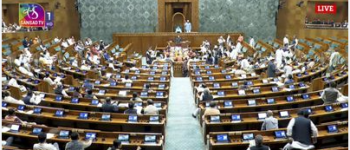
TABLE OF CONTENTS
- About Parliamentary Privileges
- Constitutional Provisions
- Committee of Privileges
Why in News- Lok Sabha Speaker Om Birla has recently nominated 15 members to the Committee of Privileges. The committee will examine cases involving breach of privilege of the House or its members. It will be headed by senior BJP leader Ravi Shankar Prasad.
About Parliamentary Privileges
Parliamentary privileges are special rights, immunities, and exemptions enjoyed by Parliament and its members so that they can perform their legislative functions effectively without outside interference.
Types of Parliamentary Privileges
1. Collective privileges of Parliament
- Right to regulate its internal proceedings.
- Right to punish for breach of privilege or contempt.
- Right to exclude strangers from proceedings.
2. Individual privileges of MPs
- Freedom of speech in Parliament.
- Immunity from legal proceedings for anything said or any vote given in Parliament.
- Freedom from arrest in civil cases during the session and 40 days before and after it.
Constitutional Provisions
Parliament
- Article 105
- Provides freedom of speech in Parliament.
- MPs are not liable to court proceedings for anything said or any vote given in Parliament or its committees.
- Article 122
- Courts cannot question parliamentary proceedings on grounds of procedural irregularity.
State Legislatures
- Article 194
- Defines privileges of State Legislatures and their members.
- Article 212
- Courts cannot question state legislative proceedings due to procedural irregularities.
| Breach of Privilege A breach of privilege occurs when any of the rights or immunities of Parliament or its members are violated. Examples
|
Committee of Privileges
The Committee of Privileges is a Parliamentary Standing Committee that examines matters related to breach of privilege.
Composition
- Lok Sabha: 15 members
- Rajya Sabha: 10 members
Members are nominated by the Speaker (Lok Sabha) or Chairman (Rajya Sabha).
Functions
- Examines cases of breach of privilege or contempt of the House.
- Summons witnesses and examines documents.
- Submits a report with recommendations to the House.
Action Taken
The House may:
- Accept or reject the committee's recommendations.
- Amend the recommendations.
- Impose penalties such as admonition, reprimand, suspension, or expulsion.
Source- TH

Author: Lemo
Lemo is the founder of Epoch IAS - a UPSC platform built not in classrooms, but at 2 AM over black coffee. He writes notes that are sharp, syllabus-ahead, and made for aspirants who are serious about cracking it. No fluff. Just focus.
Feel free to use images in our website by simply providing a source link to the page they are taken from.
-- Epoch IAS
Explore By Category
- Polity and Governance
- Important Bills and Acts
- International Relations
- International Organisations
- Places in News
- Indian Economy
- Environment
- Geography
- Species in News
- Protected Areas in News
- Science & Technology
- Government Schemes & Programmes
- History and Art & Culture
- Miscellaneous
- Index & Reports
- Defence Exercises
- Security
FREQUENTLY ASKED QUESTIONS
Some questions that you may want answer for
Which Articles of the Constitution deal with Parliamentary Privileges?


Parliamentary privileges in India are primarily mentioned under Article 105 and Article 122 of the Constitution, which relate to Parliament. Similar provisions for state legislatures are provided under Article 194 and Article 212.
How many members are there in the Committee of Privileges?
The Lok Sabha Committee of Privileges consists of 15 members, nominated by the Speaker, while the Rajya Sabha Committee of Privileges has 10 members, nominated by the Chairman of the Rajya Sabha.
Are Parliamentary Privileges codified in India?
No, parliamentary privileges in India are not fully codified. According to the Constitution, Parliament has the power to define these privileges by law, but until such a law is enacted, they are based on constitutional provisions, parliamentary conventions, and rules of procedure.
Latest Posts
 18th May 2026
![[Download PDF] Union Budget 2026–27 Summary](/storage/blog/small/download-pdf-union-budget-2026-27-summary.jpg) 30th Apr 2026
30th Apr 2026
 20th Mar 2026
 19th Mar 2026
 19th Mar 2026
-development-scheme.jpg) 19th Mar 2026
19th Mar 2026
 19th Mar 2026
 18th Mar 2026
 18th Mar 2026
 18th Mar 2026
 17th Mar 2026
 17th Mar 2026
 17th Mar 2026
 17th Mar 2026
 17th Mar 2026
Share views on Parliamentary Privileges and Privilege Committee
Please keep your views respectful and not include any anchors, promotional content or obscene words in them. Such comments will be definitely removed and your IP be blocked for future purpose.