India-Israel Relations
25th Feb 2026
Read
- Share With Friend & Family
-

-

-

-

-

-

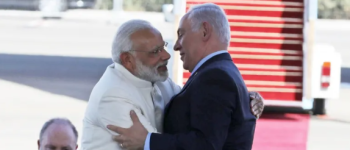
TABLE OF CONTENTS
- Why is Modi travelling to Israel? | What will be the main focus of the visit?
- Timeline of India-Israel Relations
- Areas of Cooperation Between India and Israel
- Challenges in India-Israel Bilateral Relations
- Way Forward
News- Prime Minister Narendra Modi is scheduled to undertake a two-day visit to Israel on February 25-26, 2026, marking his second visit after the historic 2017 trip - the first ever by an Indian Prime Minister. The visit comes amid heightened regional tensions in West Asia, the fragile Gaza ceasefire, and evolving geopolitical alignments involving Iran, the U.S., and Gulf countries.
Why is Modi travelling to Israel? | What will be the main focus of the visit?
| Why the Visit?
Main Focus Areas
|
Timeline of India-Israel Relations
| Distant and Hesitant Phase (1948-1992) |
|
| Normalization and Defence Pivot (1992-2014) |
|
| De-hyphenation and Strategic Alignment (2014-Present) |
|
Areas of Cooperation Between India and Israel
1. Defence and Security
- Arms and Joint Development: Israel is among India's top defence suppliers; both countries jointly developed systems like the Barak-8 missile defence system and are exploring cooperation in drones, anti-missile shields, and laser-based defence.
- Counter-Terrorism and Intelligence: Strong intelligence sharing, surveillance cooperation, and training support to tackle terrorism and border security challenges.
2. Agriculture and Water Cooperation
- Centres of Excellence: Under the Indo-Israel Agricultural Project, over 35 Centres of Excellence promote drip irrigation, protected farming, and high-yield horticulture techniques.
- Water Management Expertise: Cooperation in desalination, wastewater recycling, and micro-irrigation helps water-scarce Indian states improve productivity with limited water resources.
3. Trade and Investment
- Growing Bilateral Trade: Trade stands at around $3.75 billion (FY 2024-25), covering diamonds, chemicals, petroleum products, and expanding into electronics and medical equipment.
- Investment Framework: The 2025 Bilateral Investment Agreement and ongoing FTA negotiations aim to boost investor confidence and deepen economic ties.
4. Innovation and Technology
- Emerging Technologies: Collaboration in artificial intelligence, cybersecurity, quantum computing, space, and advanced manufacturing.
- Startup and R&D Cooperation: The India-Israel Industrial R&D and Technological Innovation Fund (I4F) supports joint research and startup partnerships.
5. Multilateral and Regional Cooperation
- I2U2 Grouping: India, Israel, the US, and UAE cooperate on food security, renewable energy, and infrastructure investments.
- IMEC Connectivity Project: The India-Middle East-Europe Economic Corridor aims to enhance trade connectivity and reduce dependence on vulnerable maritime routes like the Suez Canal.
Challenges in India-Israel Bilateral Relations
1. Balancing West Asia: India must carefully manage its close ties with Israel while maintaining strong relations with Gulf countries and Iran, especially for energy and strategic interests like Chabahar Port.
2. Palestinian Question: India's support for a two-state solution must be balanced with its deepening engagement with Israel to avoid diplomatic criticism.
3. Gaza Conflict Impact: The ongoing Gaza crisis affects India's global image and creates pressure in international forums.
4. Defence Dependence: Excessive reliance on Israeli defence imports may limit India's self-reliance goals unless genuine technology transfer is ensured.
5. Regional Instability: Rising Iran-Israel tensions and U.S. military presence in the Gulf pose risks to India's energy security and diaspora safety.
Way Forward
1. Preserve Strategic Autonomy: Continue multi-alignment without joining rigid regional blocs.
2. Maintain Diplomatic Balance: Deepen ties with Israel while reaffirming commitment to the Palestinian cause.
3. Promote Co-Development: Shift from arms imports to joint R&D and indigenous production.
4. Strengthen Economic Integration: Fast-track FTA and boost trade, startups, and innovation partnerships.
5. Use Connectivity Strategically: Leverage IMEC to enhance India's role as a trade and connectivity hub between Asia and Europe.
Conclusion
India-Israel relations have moved from limited engagement to a strong strategic partnership covering defence, agriculture, technology, and regional cooperation.Prime Minister Modi's 2026 visit highlights India's growing role in West Asia. The key challenge is to deepen ties with Israel while maintaining support for Palestine and balanced relations with Arab countries and Iran.
| Question for Pactice- Discuss the significance of Prime Minister Narendra Modi's 2026 visit to Israel in the backdrop of emerging geopolitical shifts in West Asia. |

Author: Lemo
Lemo is the founder of Epoch IAS - a UPSC platform built not in classrooms, but at 2 AM over black coffee. He writes notes that are sharp, syllabus-ahead, and made for aspirants who are serious about cracking it. No fluff. Just focus.
Feel free to use images in our website by simply providing a source link to the page they are taken from.
-- Epoch IAS
Explore By Category
Latest Posts
 18th May 2026
![[Download PDF] Union Budget 2026–27 Summary](/storage/blog/small/download-pdf-union-budget-2026-27-summary.jpg) 30th Apr 2026
30th Apr 2026
 20th Mar 2026
 19th Mar 2026
 19th Mar 2026
-development-scheme.jpg) 19th Mar 2026
19th Mar 2026
 19th Mar 2026
 18th Mar 2026
 18th Mar 2026
 18th Mar 2026
 17th Mar 2026
 17th Mar 2026
 17th Mar 2026
 17th Mar 2026
 17th Mar 2026
Share views on India-Israel Relations
Please keep your views respectful and not include any anchors, promotional content or obscene words in them. Such comments will be definitely removed and your IP be blocked for future purpose.