State of the World’s Migratory Species Report
7th Mar 2026
Read
- Share With Friend & Family
-

-

-

-

-

-

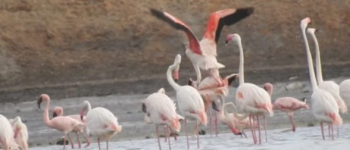
TABLE OF CONTENTS
- Why in News
- About the Report
- Key Findings of the Report
- India's Connect
- Way Forward
Why in News
A new interim update of the State of the World's Migratory Species Report warns that nearly half of the global migratory species populations are declining, with many increasingly facing the risk of extinction.
About the Report
- The State of the World's Migratory Species Report is the most comprehensive global assessment of migratory wildlife, prepared under the Convention on the Conservation of Migratory Species of Wild Animals (CMS).
- CMS is a legally binding international treaty established in 1979 under the United Nations Environment Programme (UNEP) and ratified by 188 countries, aimed at conserving migratory animals and their habitats across national boundaries.
- The first edition of the report was released in 2024, covering 1,189 species listed under the CMS treaty and analysing trends among over 3,000 additional migratory species worldwide. The 2026 interim update tracks changes in conservation status using data from the IUCN Red List, population monitoring studies, and peer-reviewed scientific literature.
CMS Treaty Structure
■ Appendix I - Lists 188 endangered migratory species requiring strict protection, including prohibition on hunting, habitat restoration, and removal of barriers to migration. India-relevant species include the Great Indian Bustard, Asian Elephant, Bengal Florican, Siberian Crane, Hawksbill Sea Turtle, Olive Ridley Turtle, and Leatherback Sea Turtle.
■ Appendix II - Lists species whose conservation status can be improved through international cooperation and formal agreements between range states.
Key Findings of the Report
1. Alarming Decline in Migratory Populations
The most critical finding of the 2026 interim update is the accelerating deterioration of migratory species populations across the globe:
- 49% of CMS-listed migratory species populations are now in decline — a 5-percentage-point rise in just two years.
- 24% of species now face extinction risk, up 2% compared to the previous assessment.
- Out of 1,189 total CMS-listed species, nearly 582 species show declining population trends.
- 26 species have been moved to a higher extinction-risk category on the IUCN Red List.
- Of these, 18 are migratory shorebirds, reflecting severe threats to coastal and wetland ecosystems.
2. Species Most Affected
The decline cuts across diverse taxa and ecosystems:
- Birds: Cranes, pelicans, shorebirds, and critically endangered species such as African Penguins.
- Ungulates: Wildebeest, Mongolian Gazelle, and other hooved mammals in Central Asia. Between 2002 and 2021, the mobility of the Mongolian Gazelle — one of the longest-distance nomadic species — declined significantly.
- Marine Species: Sharks, rays, and sea turtles, particularly in the northern Indian Ocean. Pronounced long-term declines in shorebird populations have been documented at coastal sites in India.
- Freshwater Fish: Multiple species showing range contractions due to river fragmentation and over-extraction.
3. Habitat Loss and Overexploitation: The Twin Threats
“Overexploitation, and habitat loss and fragmentation, are the two greatest threats to migratory species worldwide,” said Amy Fraenkel, Executive Secretary of CMS. Key drivers include:
- Urban expansion and agricultural conversion destroying critical stopover and breeding habitats.
- Infrastructure barriers such as roads, railways, fences, and pipelines fragmenting migration corridors, particularly for ungulates in Central Asia.
- Overfishing and illegal hunting depleting marine and terrestrial migratory populations.
Because migratory species depend on a chain of habitats spanning multiple countries, destruction at even a single node can collapse entire migratory routes.
4. Emerging Threat: Highly Pathogenic Avian Influenza (H5N1)
For the first time, H5N1 avian influenza has been identified as a significant and emerging threat to CMS-listed species. Key findings:
- H5N1 has been detected in an unusually broad host range of birds and mammals across multiple continents.
- Mass mortality events have been recorded in Critically Endangered African Penguins, Vulnerable Humboldt Penguins, Near-Threatened Peruvian Pelicans, and Red-Crowned Cranes.
- Marine mammals, including the South American Sea Lion and South American Fur Seal, have also been severely affected.
- Long-term impacts of HPAI are uncertain, but the disease adds significant pressure to already vulnerable, long-lived migratory species that are sensitive to increased mortality rates.
5. Key Biodiversity Areas (KBAs): Gaps in Protection
The report identified 9,372 Key Biodiversity Areas (KBAs) critical for migratory species. However, 47% of these areas currently lack formal legal protection, leaving key stopover and breeding habitats exposed to development and exploitation. Strengthening the protection of KBAs is considered essential to reversing migratory species declines.
6. Conservation Successes
Despite the overall alarming trend, some species show recovery as a result of coordinated international conservation action:
- Saiga Antelope - Population recovering after near-total collapse in the 1990s.
- Scimitar-Horned Oryx - Reintroduced successfully in Chad after extinction in the wild.
- Mediterranean Monk Seal - Slowly increasing under strict protection regimes.
- Vulture populations in South Asia are showing slow but measurable improvement.
India's Connect
India is a significant range state for several CMS Appendix I species. Key concerns highlighted for India in this report include:
- Pronounced long-term declines in migratory shorebird populations at coastal sites in India.
- Sharks and rays in the northern Indian Ocean, which overlap with India's EEZ, face growing extinction risk.
- India's CMS-listed species such as the Great Indian Bustard, Bengal Florican, and Siberian Crane require urgent habitat and corridor protection.
- The slow recovery of South Asian vulture populations underscores the importance of continued bans on veterinary diclofenac and protected feeding zones.
Way Forward
- Accelerate legal protection of the 47% unprotected Key Biodiversity Areas globally.
- Mainstream migratory corridor protection into national infrastructure planning and Environmental Impact Assessments (EIAs).
- Strengthen international data-sharing mechanisms to track avian influenza outbreaks and protect vulnerable species.
- Expand international agreements under CMS Appendix II for species not yet covered.
- India must integrate its CMS obligations into the National Biodiversity Strategy and Action Plan (NBSAP) under the Kunming-Montreal Global Biodiversity Framework targets.
UPSC Syllabus - GS 3- Conservation, environmental pollution and degradation, environmental impact assessment.
Source- IE

Author: Lemo
Lemo is the founder of Epoch IAS - a UPSC platform built not in classrooms, but at 2 AM over black coffee. He writes notes that are sharp, syllabus-ahead, and made for aspirants who are serious about cracking it. No fluff. Just focus.
Feel free to use images in our website by simply providing a source link to the page they are taken from.
-- Epoch IAS
Explore By Category
Latest Posts
 18th May 2026
![[Download PDF] Union Budget 2026–27 Summary](/storage/blog/small/download-pdf-union-budget-2026-27-summary.jpg) 30th Apr 2026
30th Apr 2026
 20th Mar 2026
 19th Mar 2026
 19th Mar 2026
-development-scheme.jpg) 19th Mar 2026
19th Mar 2026
 19th Mar 2026
 18th Mar 2026
 18th Mar 2026
 18th Mar 2026
 17th Mar 2026
 17th Mar 2026
 17th Mar 2026
 17th Mar 2026
 17th Mar 2026
Share views on State of the World’s Migratory Species Report
Please keep your views respectful and not include any anchors, promotional content or obscene words in them. Such comments will be definitely removed and your IP be blocked for future purpose.