UPSC Mains Model Answer: India–Malaysia Relations – Cooperation and Challenges (10 February 2026)
9th Mar 2026
Read
- Share With Friend & Family
-

-

-

-

-

-

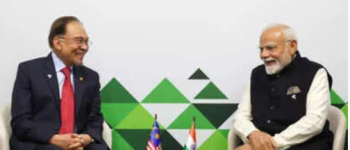
TABLE OF CONTENTS
- Introduction
- Body
- Way Forward
- Conclusion
Q. India-Malaysia relations witnessed strains in recent years despite strong historical and economic linkages. In the context of the recent high-level visit between the two countries, examine the key areas of cooperation and the challenges that continue to shape bilateral ties.
Introduction
India and Malaysia share civilisational ties spanning over a millennium, formalised with diplomatic relations in 1957. Malaysia is strategically important in India's Act East Policy and engagement with the Association of Southeast Asian Nations (ASEAN), and is India's third-largest trading partner within ASEAN.
Bilateral ties faced strain during 2019-2022 under Prime Minister Mahathir Mohamad, but have improved under Prime Minister Anwar Ibrahim. In this context, Prime Minister Narendra Modi's visit to Kuala Lumpur (7-8 February 2026)-the first since the elevation of relations to a Comprehensive Strategic Partnership (CSP) in August 2024-signalled renewed momentum in India-Malaysia relations.
Body
A. Key Areas of Cooperation
1. Trade and Economic Partnership
- Bilateral trade: $18.59 billion (2025); Malaysia is India's third-largest ASEAN trading partner.
- India exports petroleum products, agricultural produce and pharmaceuticals, while importing palm oil, electrical machinery and mineral oils.
- The India-Malaysia Comprehensive Economic Cooperation Agreement (CECA) strengthens economic integration.
- Since July 2022, trade settlement in Indian Rupees is permitted through the India International Bank of Malaysia (IIBM).
- The 10th India-Malaysia CEO Forum (February 2026) highlighted investments in semiconductors, Artificial Intelligence, fintech, clean energy and advanced manufacturing.
2. Defence and Security Cooperation
- During the 2026 visit, India proposed the sale of Dornier aircraft and discussed maintenance of Scorpene submarines and SU-30 aircraft.
- Hindustan Aeronautics Limited (HAL) opened its regional office in Kuala Lumpur in 2023, strengthening defence industrial cooperation.
- Regular joint exercises, capacity building and maritime cooperation occur under the ASEAN Defence Ministers' Meeting Plus (ADMM+) framework.
- Both countries support a free, open and rules-based Indo-Pacific, aligning India's Indo-Pacific Oceans Initiative (IPOI) with ASEAN's Outlook on the Indo-Pacific (AOIP).
3. Digital Economy and Technology
- Cooperation is expanding in Artificial Intelligence, semiconductors, fintech and digital public infrastructure.
- Malaysia has shown interest in leveraging India's Unified Payments Interface (UPI) and digital technology stack.
- Indian technology and manufacturing firms have contributed to high-skilled job creation in Malaysia.
4. People-to-People and Cultural Ties
- Malaysia hosts an Indian diaspora of about 2.9 million, the third-largest globally.
- The Tamil language has a significant presence in Malaysian education and media.
- The Audio-Visual Agreement aims to strengthen collaboration in Tamil films and music.
- Educational exchanges and student mobility between the two countries are expanding.
B. Key Challenges
1. Zakir Naik Extradition Issue
- Zakir Naik, wanted in India on charges of money laundering, hate speech and terrorism, has been residing in Malaysia since 2016.
- Malaysia has refused extradition citing the absence of a formal extradition treaty, making it a persistent irritant in bilateral ties.
2. Kashmir and Domestic Political Statements
- In September 2019, Prime Minister Mahathir Mohamad, at the United Nations General Assembly (UNGA), stated that India had “invaded and occupied Kashmir”.
- His remarks and criticism of the Citizenship Amendment Act (CAA) triggered one of the sharpest diplomatic tensions between the two countries.
3. Palm Oil Trade Frictions
- India imported about 4 million tonnes of palm oil from Malaysia in 2019, making it the largest buyer.
- During the 2019-2020 diplomatic dispute, India informally restricted refined palm oil imports, sharply affecting Malaysia's exports.
- The episode highlighted the economic vulnerability of Malaysia's palm oil sector to diplomatic tensions.
4. China Factor
- Malaysia maintains strong economic ties with China, with bilateral trade exceeding $100 billion.
- Balancing relations with both India and China sometimes limits deeper strategic alignment with India.
5. Labour and Diaspora Concerns
- Issues such as exploitation of Indian migrant workers, immigration irregularities and diaspora welfare continue to require bilateral attention.
Way Forward
- Operationalise the Comprehensive Strategic Partnership (CSP) through Joint Commission Meetings and sectoral Memoranda of Understanding (MoUs).
- Address the Zakir Naik issue diplomatically, potentially through a bilateral extradition treaty.
- Diversify trade beyond palm oil into semiconductors, electric vehicles, green hydrogen and pharmaceuticals.
- Use Malaysia's ASEAN Chairmanship (2025) to strengthen the ASEAN-India Comprehensive Strategic Partnership and the Indo-Pacific agenda.
- Expand Track 1.5 and Track 2 dialogues on maritime security, counter-terrorism and intelligence sharing.
- Strengthen labour mobility and welfare agreements to protect the Indian diaspora.
Conclusion
The February 2026 Modi-Anwar summit has revived bilateral momentum. Anchored in civilisational ties and expanding cooperation in trade, defence and the Indo-Pacific, the partnership holds strong potential. The priority now is translating diplomatic goodwill into durable institutional cooperation.

Author: Lemo
Lemo is the quiet observer of the UPSC world. He writes when the city sleeps, fueled by black coffee and the ticking clock. As the visionary behind Epoch IAS, he crafts notes that are short, sharp, and always a step ahead of the syllabus — trusted by aspirants burning the midnight oil.
Feel free to use images in our website by simply providing a source link to the page they are taken from.
-- Epoch IAS
Explore By Category
Latest Posts
 9th Mar 2026
 9th Mar 2026
 9th Mar 2026
 9th Mar 2026
 7th Mar 2026
 7th Mar 2026
 7th Mar 2026
 7th Mar 2026
![[Result] UPSC Civil Services 2025 Final Result](/storage/blog/small/upsc-civil-services-2025-final-result.jpg) 6th Mar 2026
6th Mar 2026
 5th Mar 2026
 5th Mar 2026
 5th Mar 2026
 3rd Mar 2026
 2nd Mar 2026
Share views on UPSC Mains Model Answer: India–Malaysia Relations – Cooperation and Challenges (10 February 2026)
Please keep your views respectful and not include any anchors, promotional content or obscene words in them. Such comments will be definitely removed and your IP be blocked for future purpose.